How Midweek European Fixtures Disrupt Domestic Form Patterns and Alter Betting Markets in Ligue 1
Écrit par Parker Braun · 25/8/2026
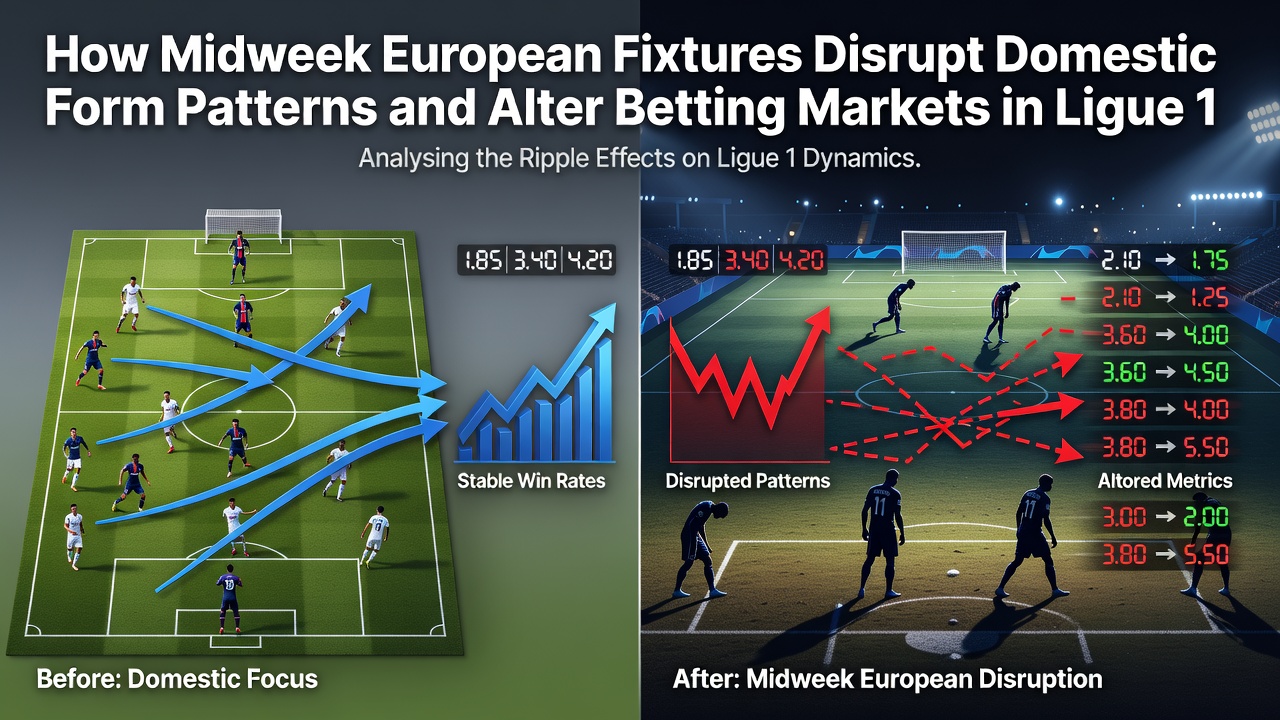
How Midweek European Fixtures Disrupt Domestic Form Patterns and Alter Betting Markets in Ligue 1
European competition nights reshape schedules across Ligue 1 in ways that extend far beyond the pitch itself. Clubs balance Champions League or Europa League commitments with domestic rounds, and those midweek trips create measurable shifts in player availability, recovery times, and tactical choices that follow into weekend matches.
Travel and Recovery Demands
Teams departing for venues in Spain, Germany, or Eastern Europe often return late on Thursday or Friday, cutting into preparation periods before Sunday fixtures. Data from the Ligue de Football Professionnel shows average travel distances for European participants exceed 3,000 kilometers per round, while domestic-only sides cover roughly half that distance over the same period. Recovery protocols adjust accordingly, with medical staff monitoring muscle fatigue markers and sleep patterns that drop below baseline levels after such journeys.
Rotation becomes necessary because squads rarely carry enough depth to repeat high-intensity lineups. Coaches reduce minutes for key midfielders and fullbacks who log the heaviest workloads on Tuesday or Wednesday nights, and those substitutions alter team cohesion in the following domestic game. Observers note that teams returning from European away ties post lower pass completion rates in the first half of their next Ligue 1 match compared with their season averages.
Form Pattern Shifts
Statistical reviews of the past five seasons reveal a consistent dip in points per game for clubs playing midweek European fixtures. The effect appears strongest in the 72-hour window between matches, where win rates fall by roughly 12 percent relative to games with a full week of rest. Home fixtures after European travel show smaller declines than away games, yet both scenarios produce fewer shots on target and lower expected goal totals according to tracking data.
August 2026 schedules already list several Ligue 1 sides with early Champions League qualifiers followed by immediate domestic rounds, repeating the pattern seen in prior campaigns. Researchers tracking these sequences find that defensive errors increase after midweek exertions, particularly in set-piece situations where concentration levels drop. Teams that advance deep into Europe often experience a secondary effect once they exit the competition, as the sudden absence of extra matches leaves them with an altered rhythm that takes several weeks to stabilize.
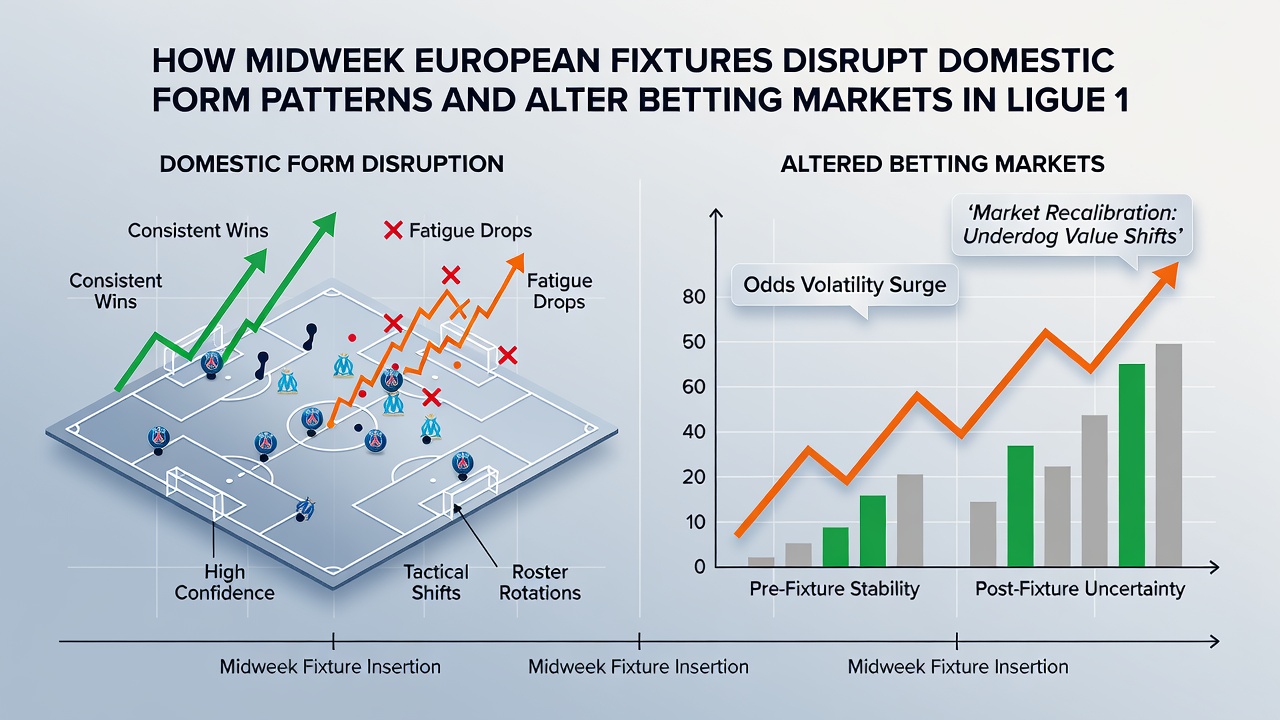
Betting Market Adjustments
Bookmakers respond to these patterns by widening or narrowing margins on specific outcomes. Totals markets move first because reduced scoring trends become visible across multiple seasons. Spreads on corners and cards also shift when fatigue data enters the models, since teams that rotate heavily commit more fouls in the opening stages of the next domestic fixture. Liquidity in live betting increases during these windows as bettors attempt to exploit perceived value created by the schedule disruption.
Studies compiled by the University of Sydney sports analytics group indicate that market efficiency holds overall, yet localized inefficiencies appear in the hours immediately after European results are confirmed. Sharp bettors adjust positions faster than recreational markets, producing temporary odds discrepancies that close within 24 hours. French regulatory filings confirm that turnover on Ligue 1 matches rises between 8 and 15 percent during weeks that feature multiple European ties, reflecting heightened interest from both domestic and international participants.
Case Examples Across Recent Seasons
One notable sequence occurred when a Paris-based side played a Wednesday Champions League match in Italy before hosting a mid-table opponent on Saturday. The home team recorded its lowest pass accuracy of the season in that domestic fixture, allowing the visitors to generate more counter-attacks than expected. Betting volumes on the underdog moneyline increased sharply once lineups were announced and key absences became clear.
Similar patterns emerged with clubs from Marseille and Lyon during Europa League campaigns, where successive away legs preceded domestic losses that deviated from pre-match projections. Data sets covering these instances show that the largest variance between expected and actual results occurs when the European fixture involves extra time or penalties, extending physical demands beyond standard 90-minute loads.
Conclusion
Schedule compression from midweek European fixtures produces measurable changes in Ligue 1 performance metrics and corresponding market responses. Travel distance, player rotation, and recovery windows all contribute to altered statistical outputs that betting operators incorporate into their pricing. As the 2026 calendar unfolds, the same variables will continue to shape both on-field results and the odds offered around them.